What Is a Personal AI System and How Does AI-Powered Automation Work?
What Is a Personal AI System?
A personal AI system is a connected AI environment designed to help an individual manage information, complete tasks, automate workflows, and interact with different digital tools.
Instead of relying on a single chatbot for individual questions, a personal AI system can combine multiple components such as AI models, memory, agents, automation platforms, applications, databases, and external tools.
The goal is to create a system that can work with a person’s information and workflows over time.
For example, a basic AI assistant may answer a question about a document when the document is provided. A more developed personal AI system could potentially connect to a knowledge base, retrieve relevant information, use tools, maintain useful context, and trigger predefined actions.
The exact capabilities depend on how the system is designed and which tools and permissions are connected to it.
How Does AI-Powered Automation Work?
AI-powered automation combines artificial intelligence with automated workflows.
Traditional automation usually follows predefined rules. When a particular event occurs, the system performs a specific action.
AI automation adds an intelligent processing layer. An AI model can interpret information, classify content, generate text, summarize data, or determine which predefined workflow should be used.
A simplified AI-powered workflow can look like:
Trigger → Collect Information → AI Processing → Decision → Action → Result
For example, an incoming message could trigger a workflow. An AI system could analyze the message, identify its category, retrieve relevant information, and then pass the result to another application.
This allows AI to become part of a broader workflow rather than functioning as an isolated chatbot.
Who Is Kris Puckett?
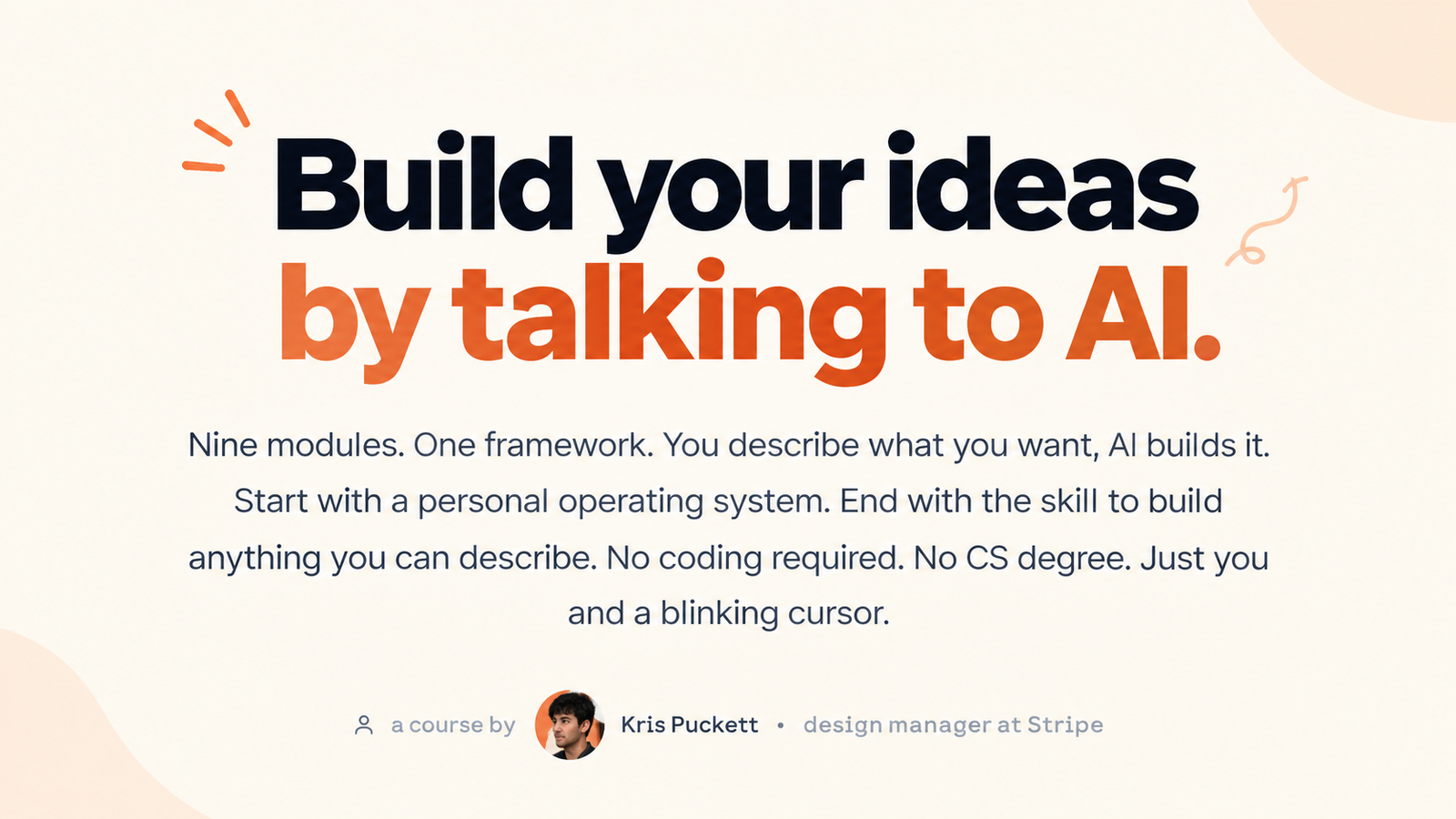
Kris Puckett is associated with educational material focused on building and using modern AI systems.
His Neuma Course Premium explores concepts connected with personal AI systems, AI agents, automation, persistent context, AI memory, orchestration, MCP servers, and practical AI projects.
The course takes a systems-oriented approach to AI, focusing on how different technologies can be connected to create a more capable personal AI environment.
What Is Neuma Course Premium?
Neuma Course Premium is an AI-focused training program associated with Kris Puckett.
The course explores the development of personal AI systems and the technologies that can be used to connect AI models with memory, tools, agents, automation, and other components.
Rather than focusing exclusively on prompting a chatbot, the broader concept is to understand how AI can become part of a connected personal technology stack.
This makes the subject relevant to people interested in AI automation, AI agents, personal productivity, and building customized AI environments.
What Is AI Memory?
AI memory refers to mechanisms that allow an AI system to retain or retrieve relevant information across interactions or workflows.
A conventional chatbot interaction may only use the information available within the current conversation. A system with an external memory layer can potentially retrieve relevant information from stored data when needed.
For example, a personal AI system could have access to notes, documents, preferences, project information, or other authorized data sources.
Memory can therefore make an AI system more useful for longer-term workflows.
However, memory also introduces important considerations around privacy, data access, accuracy, and information management. Users should understand what information is stored, where it is stored, and which applications or agents can access it.
How Do AI Agents Fit Into a Personal AI System?
AI agents can act as task-oriented components inside a personal AI environment.
An AI agent can receive a defined objective, process information, use available tools, and perform multiple steps within the permissions provided to it.
For example, a personal AI system might use one agent for research, another workflow for organizing information, and another process for managing repetitive tasks.
The agents do not necessarily need to operate independently. They can be connected through workflows and controlled according to specific instructions.
This creates an architecture in which AI models, agents, memory, tools, and automation work together.
What Is AI Orchestration?
AI orchestration refers to coordinating different AI models, agents, tools, workflows, and data sources so that they can operate as part of a larger system.
Modern AI projects can involve multiple technologies. One application may provide the AI model, another may provide automation, another may store information, and another may expose an external tool through an API.
Orchestration connects these components.
Instead of treating each AI tool separately, orchestration allows developers and users to design workflows in which different components have specific roles.
What Is MCP?
MCP, or Model Context Protocol, is a technology designed to provide a standardized way for AI applications to interact with external tools and data sources.
This type of technology is important for agentic AI because AI systems become more capable when they can interact with information and tools beyond the model itself.
For personal AI systems, tool connectivity can allow an AI assistant or agent to interact with authorized applications and services according to the system’s configuration.
The practical implementation depends on the specific MCP server, client, tools, permissions, and data involved.
Why Is a Personal AI System Useful?
A personal AI system can be useful because individuals increasingly work across many digital tools and information sources.
Instead of manually moving information between applications, users can potentially connect parts of their workflow.
For example, a personal AI environment could help with:
- Research and information gathering
- Document organization
- Knowledge management
- Task automation
- Content workflows
- Project assistance
- Repetitive digital processes
- Personal productivity
- AI-powered search
- Data processing
The objective is not necessarily to automate every activity. A well-designed system can focus on repetitive or time-consuming tasks while keeping humans involved in decisions that require judgment.
Kris Puckett – Neuma Course Premium
Neuma Course Premium by Kris Puckett (2026) is a premium AI & Automation course designed for designers, writers, founders, creators, and professionals who want to build personal AI systems, automate workflows, create persistent AI context, improve productivity, and build digital projects by working conversationally with AI.
Personal AI System vs AI Chatbot
A personal AI system is broader than a standard AI chatbot.
A chatbot primarily provides an interface for communicating with an AI model. A personal AI system can include the chatbot as only one component.
A broader system may contain:
AI Model + Memory + Agents + Tools + Automation + Data + Workflows
This architecture allows AI to participate in more complex processes.
For example, a chatbot can help write an email. A personal AI system could potentially retrieve relevant project information, draft the email using that context, save the draft, and trigger another workflow—provided the necessary tools and permissions are configured.
What Can You Build With a Personal AI System?
The possibilities depend on the technology and configuration, but personal AI systems can be designed around many practical use cases.
Personal Knowledge Systems: Connect AI to authorized notes, documents, and knowledge bases.
Research Assistants: Build workflows that collect, organize, and summarize information.
Productivity Systems: Use AI to assist with repetitive digital tasks and information management.
Content Systems: Connect research, drafting, organization, and content workflows.
Business Workflows: Automate selected administrative and operational processes.
AI Agents: Create task-specific agents that can work with approved tools and information.
Why Learn About Personal AI Systems?
Understanding personal AI systems is increasingly useful because AI is moving beyond standalone chat interfaces.
The important question is no longer only what an AI model can generate. It is also how that model can interact with information, tools, memory, applications, and workflows.
Learning these concepts can help users understand the architecture behind more advanced AI applications.
Kris Puckett’s Neuma Course Premium provides a course-based environment for exploring these concepts and understanding how different AI technologies can be assembled into a broader personal AI system.
Important Considerations When Building AI Systems
Building a personal AI system also requires careful planning.
Users should consider what information an AI system can access, which tools it can control, what permissions it has, and where human approval should be required.
Security and privacy are particularly important when AI systems are connected to personal or business information.
It is also useful to test workflows gradually rather than giving an automated system broad permissions immediately. Clear instructions, limited access, logging, and human review can help make AI-powered workflows easier to manage.
Final Thoughts
Personal AI systems represent a broader approach to using artificial intelligence.
Instead of treating AI as a single chatbot, a personal AI system can combine models, memory, agents, tools, automation, data, and workflows into one connected environment.
AI-powered automation can then help these components work together to process information and perform predefined actions.
Kris Puckett’s Neuma Course Premium explores this broader AI ecosystem, making it relevant for learners interested in personal AI, automation, AI agents, memory, orchestration, MCP, and modern AI workflows.
The most practical approach is to identify useful workflows first and then determine where AI, automation, or agents can provide meaningful assistance.
FAQs
What is a personal AI system?
A personal AI system is a connected environment that combines AI models with components such as memory, agents, tools, data, and automation to assist with personalized tasks and workflows.
How does AI-powered automation work?
AI-powered automation combines AI processing with automated workflows. Information enters the system, AI can interpret or process it, and the workflow performs predefined actions based on the resulting information.
What is Neuma Course Premium?
Neuma Course Premium is an AI-focused course associated with Kris Puckett that explores personal AI systems, AI agents, automation, memory, orchestration, MCP, and related AI technologies.
Who is Kris Puckett?
Kris Puckett is associated with AI education focused on building and using modern AI systems, including personal AI environments, agents, automation, and connected AI technologies.
What is AI memory?
AI memory refers to systems that allow relevant information to be stored and retrieved so an AI application can use that information in future interactions or workflows.
What are AI agents?
AI agents are AI-powered systems designed to pursue defined tasks or objectives by processing information and, when configured to do so, interacting with connected tools and applications.
What is AI orchestration?
AI orchestration is the coordination of AI models, agents, tools, data, and workflows so they can operate together as part of a larger AI system.
What is MCP in AI?
MCP stands for Model Context Protocol. It is a standardized approach for connecting AI applications with external tools and data sources.
Can a personal AI system automate business tasks?
Yes. Depending on its configuration and permissions, a personal AI system can assist with selected business processes such as research, information management, content workflows, and repetitive administrative tasks.
Is a personal AI system the same as ChatGPT?
Not necessarily. ChatGPT or another AI chatbot can be one component of a personal AI system. A broader personal AI system can additionally include memory, agents, external tools, automation, databases, and customized workflows.