
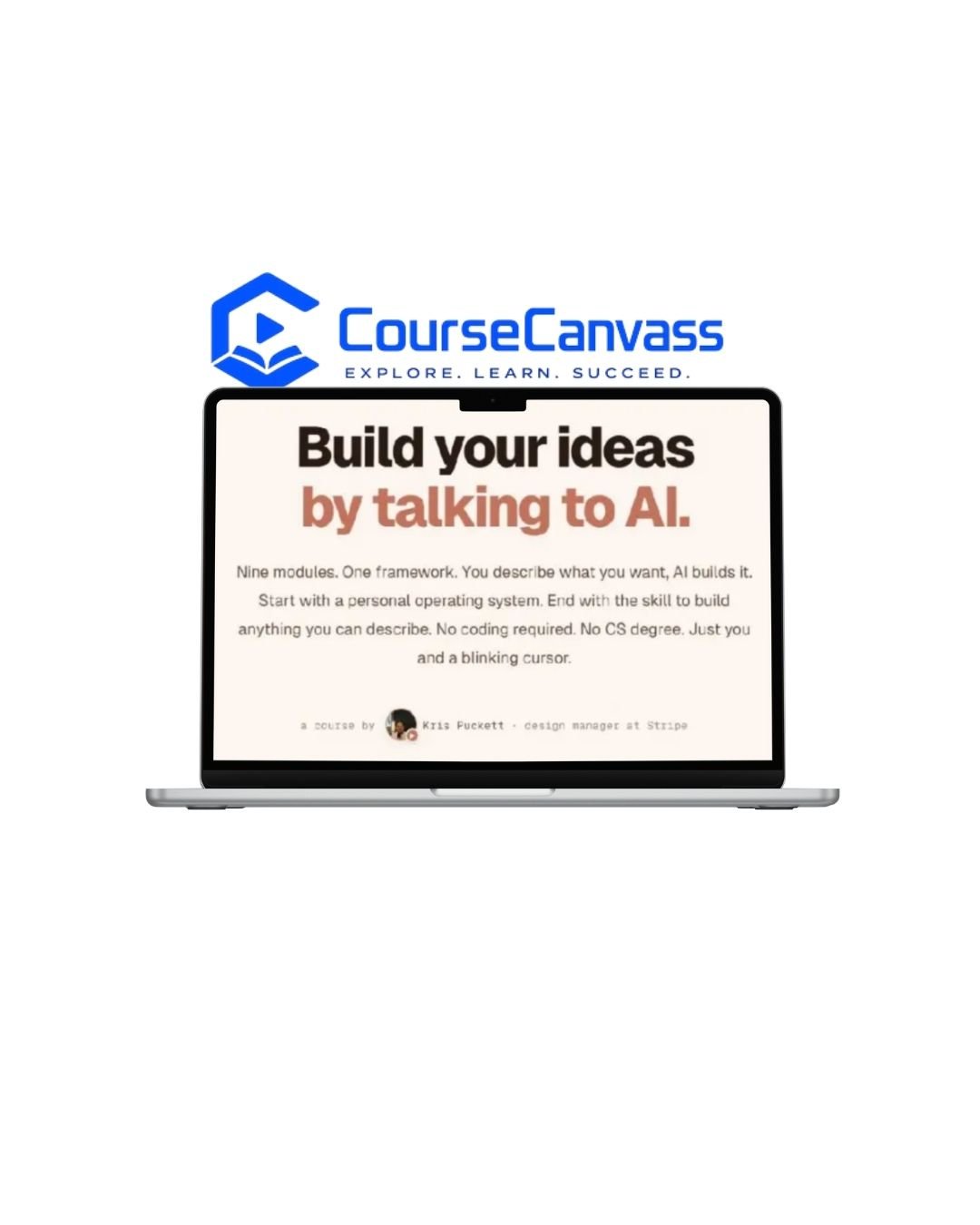
Kris Puckett – Neuma Course Premium
Original price was: $78.00.$19.00Current price is: $19.00.
Interested in purchasing this course?Contact us directly to receive your payment link. 🟢 Get Payment Link on WhatsApp
Neuma Course Premium by Kris Puckett (2026) is a premium AI & Automation course designed for designers, writers, founders, creators, and professionals who want to build personal AI systems, automate workflows, create persistent AI context, improve productivity, and build digital projects by working conversationally with AI.
Description
Course Overview
Neuma Course Premium by Kris Puckett is a comprehensive AI & Automation course focused on helping designers, writers, founders, creators, and professionals learn how to build useful AI-powered systems through conversation. The program teaches a practical approach to working with AI that goes beyond simple prompting by combining persistent context, memory, files, workflows, automation, agents, and real-world projects. The official Neuma course is specifically designed for people who may have little or no traditional coding experience.
The program begins with the fundamentals of conversational AI building. Students learn how to describe problems, communicate requirements, review AI-generated work, and redirect the system when changes are needed. This approach helps learners understand AI as a collaborative building environment rather than simply a tool for generating isolated answers.
A major focus of the curriculum is Claude Code and working with a local project environment. Participants learn how to establish a workspace and begin creating useful systems through natural-language interaction. The course is designed to make the initial experience approachable even for learners who have never worked with a terminal or traditional programming workflow.
The course also emphasizes AI context and persistent memory. Learners explore how files containing identity, instructions, preferences, logs, and maintained knowledge can provide AI systems with information that persists beyond an individual conversation. This creates a foundation for building more personalized and useful AI workflows.
Personal AI system development is another central component. Students build a personal AI operating system designed to work with their own information, tasks, routines, and context. Rather than simply using a prebuilt application, learners develop a system that can be adapted to their individual needs and workflows.
The curriculum also explores daily AI briefings. Participants can create systems that combine relevant information such as tasks, schedules, personal context, and other inputs into a useful daily overview. This demonstrates how AI can be integrated into everyday planning and decision-making.
Energy-aware task management forms another practical area of study. Learners explore how tasks can be organized according to available capacity and working conditions rather than relying exclusively on static priority lists. This approach can help create more flexible personal productivity workflows.
The program also introduces AI coaching systems. Students can organize personal information, patterns, goals, and guardrails so that AI can provide more context-aware feedback. Persistent information allows the system to work from an evolving knowledge base instead of treating every interaction as completely separate.
Automation receives significant attention throughout the course. Learners explore skills, hooks, scheduled processes, event-driven workflows, and other mechanisms that can allow AI systems to perform useful actions with less manual intervention. These capabilities provide a foundation for building increasingly capable personal and business workflows.
The advanced curriculum expands into AI agents and orchestration. Participants learn how AI systems can be extended beyond a single conversational workflow into more structured systems involving agents, skills, hooks, MCP servers, and other integrations. The official course describes advanced modules covering agents, orchestration, custom MCP servers, and building applications.
The course also emphasizes practical building rather than theory alone. Each module focuses on demonstrating a concept and then applying it to a real system. This project-based approach helps learners understand how the individual components work together in a larger AI environment.
The program encourages learners to develop transferable AI-building skills. Instead of depending exclusively on a particular prompt or interface, students learn principles for describing ideas, reviewing generated results, refining instructions, organizing context, and building systems that can evolve as their needs change.
Whether you’re a designer who wants to build your ideas, a writer looking to automate repetitive workflows, a founder developing internal systems, or a creator exploring AI-powered productivity, Neuma Course Premium by Kris Puckett (2026) provides practical frameworks for building personalized AI systems without requiring a traditional computer-science background.
By combining conversational AI building, Claude Code, persistent context, AI memory, personal AI systems, daily briefings, task management, AI coaching, automation, agents, orchestration, MCP servers, and practical project development, Neuma Course Premium equips learners with practical knowledge for building useful AI-powered systems and turning ideas into working digital projects.
FAQs
What is Neuma Course Premium?
It is an AI & Automation course by Kris Puckett that teaches learners how to build personal AI systems and digital projects through conversational interaction with AI.
Who should take this course?
The course is ideal for designers, writers, founders, creators, professionals, and aspiring AI builders who want to develop practical AI systems without relying on traditional programming methods.
Is this course beginner-friendly?
Yes. The course starts from the basics of setting up a workspace and working with Claude Code before progressing into memory, automation, agents, orchestration, and advanced AI systems.
What topics are covered?
The course covers conversational AI building, Claude Code, persistent context, AI memory, personal AI operating systems, daily briefings, task management, AI coaching, automation, agents, orchestration, skills, hooks, and MCP servers.
What can learners build?
The primary project is a personalized AI operating system that can work with persistent context, memory, tasks, briefings, and workflows. The advanced material also explores extending these principles to applications and other digital projects.
Related products
-
Sale!
Luke Mills Iha & Mario Castelli-Genesis Membership
Original price was: $297.00.$17.00Current price is: $17.00. -
Sale!

AI Lead Gen & Sales Automation Systems for B2B
Original price was: $1,497.00.$38.00Current price is: $38.00. -
Sale!
Prajwal Tomar-AI MVP Builders
Original price was: $35.00.$15.00Current price is: $15.00. -
Sale!
Jay Margaliot-Build Your First AI Employee in 5 Days
Original price was: $497.00.$20.00Current price is: $20.00.

Reviews
There are no reviews yet.