What Is The Filmmaker’s Academy by Adrian Per and How Does It Teach Cinematic Storytelling?
Creating a good video is no longer limited to professional film studios. Today, creators can produce high-quality visual content using cameras, smartphones, affordable lighting, editing software, and other accessible tools. However, having good equipment does not automatically make a video cinematic. Strong filmmaking also depends on storytelling, composition, camera movement, lighting, sound, pacing, and intentional creative decisions.
The Filmmaker’s Academy by Adrian Per is designed around these principles. The program focuses on helping creators develop a more cinematic approach to filmmaking and move beyond simply recording content. Its curriculum covers areas such as visual storytelling, composition, camera movement, lenses, lighting, sound, editing rhythm, and professional filmmaking practices.
Adrian Per’s Content College positions the Academy as part of a creator-to-filmmaker learning path, with an emphasis on developing cinematic storytelling and creating intentional visual work.
What Is The Filmmaker’s Academy?
The Filmmaker’s Academy is a filmmaking training program created by Adrian Per for creators who want to improve their filmmaking and cinematic storytelling skills.
The program approaches filmmaking as more than camera operation. It focuses on understanding why certain shots, compositions, movements, lighting choices, sounds, and edits work together to communicate a story.
This distinction is important because filmmaking is ultimately about communication. A technically sharp image can still feel uninteresting if it does not contribute to the story or emotion of a scene.
The Academy therefore focuses on the creative decisions behind the finished video.
Who Is Adrian Per?
Adrian Per is a filmmaker and content educator associated with Content College. His educational work focuses on helping creators improve their approach to filmmaking and cinematic content.
His teaching philosophy emphasizes creating intentional visual work without assuming that creators need massive production budgets or complicated equipment.
The Filmmaker’s Academy builds on this philosophy by focusing on filmmaking principles that can be applied across different cameras, environments, and production situations.
What Does The Filmmaker’s Academy Teach?
The Academy covers several areas that contribute to cinematic filmmaking.
Visual Storytelling
Visual storytelling is one of the foundations of filmmaking.
Instead of explaining everything through dialogue or narration, filmmakers can communicate information through images, composition, movement, lighting, and editing.
A character entering a room, for example, can be presented in many different ways. A wide shot may establish the environment, while a closer shot can emphasize the character’s reaction. The choice of shot changes how the audience experiences the moment.
The Academy encourages creators to think about these choices intentionally.
Composition and Framing
Composition determines how visual elements are arranged inside the frame.
Strong composition can direct attention, establish relationships between subjects, create depth, and influence the mood of a scene.
The Filmmaker’s Academy explores cinematic composition and framing so creators can make more deliberate visual decisions.
Important considerations include:
- Subject placement
- Negative space
- Foreground and background
- Depth
- Symmetry and balance
- Visual hierarchy
- Relationship between subjects and environment
Learning these principles can help creators create stronger images regardless of the camera they use.
Camera Movement
Camera movement can change the energy and emotional character of a scene.
A static camera can create stability or tension, while controlled movement can reveal information, follow a subject, or make a sequence feel more dynamic.
The important principle is intentionality.
Instead of moving the camera simply because movement looks impressive, filmmakers can ask what the movement contributes to the story.
The Academy explores camera movement as part of a broader visual storytelling approach.
Lenses and Perspective
Lens selection affects how a scene looks and feels.
Different focal lengths can influence perspective, depth, subject isolation, and the relationship between a person and their surroundings.
Understanding lenses therefore gives filmmakers another creative tool.
The Academy’s filmmaking approach encourages creators to think about lens choice in relation to the story and desired visual result rather than choosing equipment based purely on specifications.
Cinematic Lighting
Lighting can dramatically influence the appearance and mood of a scene.
The same subject can look completely different depending on the direction, intensity, softness, and color of the light.
The Filmmaker’s Academy includes cinematic lighting concepts and practical approaches to creating visually appealing scenes.
This is particularly useful for independent creators because cinematic lighting does not always require a large film set.
Understanding how to position and shape available light can often make a significant difference.
Sound Design
Filmmaking is not only visual.
Sound can establish atmosphere, provide information, create transitions, and influence the emotional response to a scene.
The Academy therefore treats sound as an important part of cinematic storytelling.
Creators can consider elements such as:
- Dialogue
- Music
- Ambient sound
- Sound effects
- Silence
- Audio transitions
- Layering
When visual and audio elements work together, a scene can become much more immersive.
Editing Rhythm
Editing determines how individual shots become a sequence.
The timing of cuts can influence how viewers experience a scene. Fast cuts may create energy, while longer shots can provide space for an audience to observe a moment.
The Academy explores editing rhythm and pacing as filmmaking tools.
Rather than simply cutting footage together, creators can learn to consider why a particular shot should remain on screen for a certain amount of time and how it should connect with the next shot.
Storytelling Through Sequences
A filmmaker does not simply create individual shots. They create sequences.
A sequence might contain:
- An establishing shot
- A medium shot
- A close-up
- A detail shot
- A reaction
- A transition
The individual shots become meaningful because of how they are arranged.
Understanding sequences can help creators plan their filming more effectively and avoid returning from a shoot with footage that looks attractive but does not work together.
From Content Creator to Filmmaker
One of the most interesting aspects of The Filmmaker’s Academy is its focus on the transition from content creator to filmmaker.
Content creation often emphasizes speed, consistency, trends, and platform-specific formats.
Filmmaking adds another layer: intentional storytelling.
A filmmaker considers:
What is the story?
What should the viewer feel?
What should the viewer see?
Why is this shot necessary?
How should the scene sound?
How should the sequence be edited?
This mindset can help creators become more deliberate in their work.
Can You Create Cinematic Videos Without Expensive Equipment?
Yes. Expensive equipment can provide additional capabilities, but cinematic results are not determined by equipment alone.
Composition, lighting, storytelling, sound, camera movement, and editing can have a major impact on the final result.
This is one reason filmmaking education can be useful for creators who work with limited resources.
The goal is to understand the principles well enough to make good creative decisions with whatever equipment is available.
Who Is The Filmmaker’s Academy For?
The Academy can be relevant to:
- Aspiring filmmakers
- Videographers
- YouTubers
- Content creators
- Social-media creators
- Commercial video creators
- Solo filmmakers
- Video editors
- Creators interested in cinematic storytelling
- Intermediate creators looking to improve their visual skills
It can be particularly useful for creators who already understand basic video production but want to develop a more intentional cinematic style.
Why Is Cinematic Storytelling Important?
Cinematic storytelling can make content more memorable because it combines multiple forms of communication.
Instead of relying exclusively on spoken information, creators can communicate through:
- Visual composition
- Facial expressions
- Camera movement
- Lighting
- Sound
- Editing
- Pacing
- Environment
These elements can work together to create an experience rather than simply deliver information.
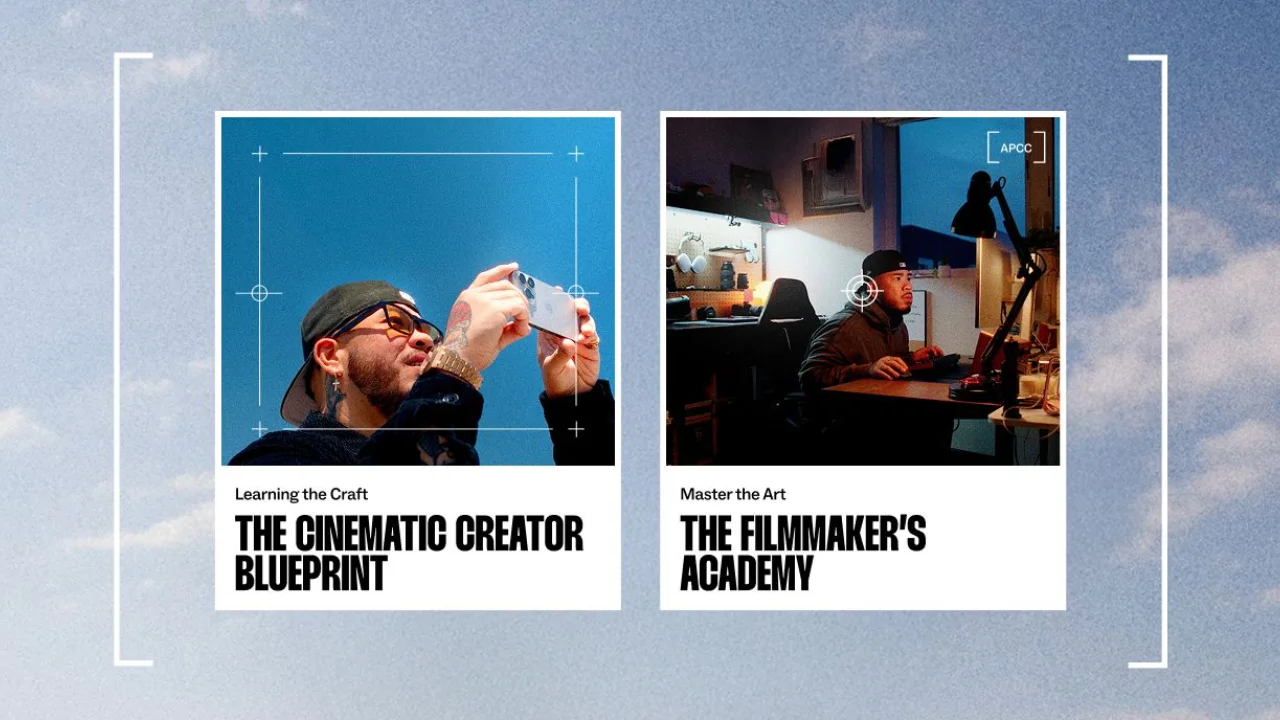
The Cinematic Creator Blueprint
Adrian Per’s Content College also presents The Cinematic Creator Blueprint as part of its creator education ecosystem.
The Blueprint provides a foundation for creators, while The Filmmaker’s Academy focuses more deeply on filmmaking and cinematic storytelling.
This creates a progression for creators who want to develop their skills from general content creation toward more advanced filmmaking.
What Skills Can You Develop?
The major areas associated with The Filmmaker’s Academy include:
Storytelling
Learn how to communicate ideas and emotions through visual sequences.
Composition
Develop stronger control over framing, depth, and visual balance.
Camera Movement
Use movement intentionally to support the story.
Lighting
Understand how lighting affects mood and visual quality.
Sound
Use audio as an active part of storytelling.
Editing
Improve pacing, rhythm, and shot selection.
Cinematic Thinking
Develop a mindset focused on intentional visual decisions.
Why Learn Filmmaking in 2026?
Video continues to play a major role in online communication, marketing, entertainment, education, and personal branding.
Creators are producing videos for YouTube, Instagram, TikTok, websites, advertisements, documentaries, courses, and commercial projects.
As more people gain access to video-production tools, creative quality and storytelling become increasingly important ways to distinguish content.
Learning filmmaking principles can therefore help creators build skills that extend beyond a single social-media platform.
What Makes The Filmmaker’s Academy Different?
The Academy’s emphasis is not simply on camera settings or equipment.
Its broader approach combines:
Storytelling + Composition + Camera + Lighting + Sound + Editing
This is important because a finished film is the result of all these elements working together.
A beautiful camera shot cannot compensate for weak storytelling, and strong editing cannot always fix poorly planned footage.
A filmmaker needs to understand the entire visual process.
Final Thoughts
The Filmmaker’s Academy by Adrian Per is designed for creators who want to take filmmaking more seriously and develop a stronger cinematic approach to video production.
The program focuses on the creative foundations behind filmmaking, including visual storytelling, composition, framing, camera movement, lenses, lighting, sound design, pacing, and editing rhythm.
Its central idea is that filmmaking is not simply about recording beautiful images. It is about making intentional decisions that help communicate a story.
For creators who want to move beyond basic content creation and develop a more deliberate filmmaking style, The Filmmaker’s Academy offers a structured learning path centered on cinematic storytelling and practical filmmaking skills.

Adrian Per – The Filmmaker’s Academy 2026
Adrian Per – The Filmmaker’s Academy 2026 is a comprehensive filmmaking program focused on visual storytelling, cinematography, camera work, composition, lighting, video production, and editing. Designed for aspiring filmmakers and video creators, the program helps learners understand the creative and practical elements involved in producing compelling visual content. Explore filmmaking fundamentals, strengthen your production workflow, and develop a more intentional approach to creating professional-looking films and videos.
Frequently Asked Questions
What is The Filmmaker’s Academy?
The Filmmaker’s Academy is a filmmaking training program by Adrian Per focused on cinematic storytelling, composition, camera movement, lighting, sound, editing, and filmmaking techniques.
Who is Adrian Per?
Adrian Per is a filmmaker and content educator associated with Content College, where he teaches creators about filmmaking and cinematic content.
What does The Filmmaker’s Academy teach?
The Academy covers visual storytelling, composition, framing, camera movement, lenses, cinematic lighting, sound design, editing rhythm, pacing, and professional filmmaking practices.
Is The Filmmaker’s Academy suitable for beginners?
The Academy can be useful for creators developing their filmmaking skills, particularly those who already have some familiarity with creating video and want to move toward more intentional cinematic storytelling.
Does the Academy teach cinematic lighting?
Yes. Cinematic lighting is one of the important areas covered by the program.
Does The Filmmaker’s Academy cover sound?
Yes. Sound design and the relationship between audio and visual storytelling are important parts of the filmmaking approach.
Does the course teach video editing?
Yes. Editing rhythm, pacing, and the relationship between individual shots are among the filmmaking concepts covered.
Do I need expensive filmmaking equipment?
Not necessarily. Understanding storytelling, composition, lighting, sound, and editing can be more important than simply owning expensive equipment.
What category does The Filmmaker’s Academy belong to?
For CourseCanvass, Filmmaking is the most suitable primary category.