What Is AI Automation and How Do AI-Powered Workflows Work?
What Is AI Automation?
AI automation is the use of artificial intelligence together with automated workflows to perform tasks that would traditionally require manual effort. Instead of simply following fixed instructions, AI-powered systems can process information, interpret data, generate content, make decisions within defined rules, and trigger actions across connected applications.
Traditional automation generally follows predetermined rules. For example, a workflow might automatically copy information from one application into another whenever a form is submitted. AI automation can make that process more flexible by allowing an AI system to interpret the submitted information, determine what action is appropriate, generate a response, and then continue the workflow.
This combination of AI and automation is becoming increasingly useful for businesses, creators, marketers, agencies, and professionals who want to reduce repetitive work and create more efficient digital systems.
How Do AI-Powered Workflows Work?
An AI-powered workflow normally connects several steps together. A trigger starts the workflow, information is collected or received, an AI model processes the information, and the workflow then performs one or more actions.
For example, a business could create a workflow where a new customer inquiry triggers an AI system to analyze the message, identify the customer’s request, prepare a suitable response, organize the information, and send the relevant data to another business application.
The important concept is that AI does not necessarily replace the entire workflow. Instead, it can become an intelligent component inside an automated system.
AI-powered workflows can therefore combine:
- Triggers and automated actions
- AI models
- AI agents
- APIs and software integrations
- Data processing
- Content generation
- Notifications
- Customer-support processes
- Lead management
- Research workflows
- Business operations
Who Is Jack Roberts?
Jack Roberts is an AI automation educator and creator whose work focuses on practical applications of artificial intelligence, automation, AI agents, and digital workflows.
His approach centers on using AI tools to build systems that can handle useful tasks rather than treating AI simply as a chatbot or content-generation tool. His educational material explores how different technologies can be connected to create automated systems for business and productivity.
The Jack Roberts – AI Automations (June 2026) course on CourseCanvass is positioned around practical AI automation, including workflows, AI agents, integrations, business automation, and automation systems.
What Does Jack Roberts’ AI Automations Course Cover?
Jack Roberts’ AI Automations course focuses on the practical side of building AI-powered systems. Rather than concentrating only on AI theory, the course explores how different tools and technologies can work together to automate real tasks.
Topics associated with the course include AI workflows, AI agents, integrations, n8n, Claude Code, lead-generation automation, content automation, customer-support automation, and business automation.
This makes the course relevant for people who want to understand how separate AI tools can become part of a larger automated system.
A major concept is workflow design. Instead of asking what one AI tool can do independently, AI automation looks at an entire process and identifies where AI can make that process faster, more intelligent, or less dependent on repetitive manual work.
Why Is AI Automation Useful?
AI automation can be useful because many digital processes contain repetitive tasks. Businesses may need to process customer inquiries, organize information, create content, research topics, manage leads, update databases, or communicate with customers.
Automating appropriate parts of these processes can help reduce repetitive manual work and create more consistent workflows.
AI can add another layer of flexibility because it can work with information that is not always structured in exactly the same way.
For example, a conventional workflow may require a user to select a specific option before an action occurs. An AI-powered workflow can potentially interpret natural-language information and determine which predefined process should be triggered.
However, effective AI automation still requires human oversight. AI systems can make mistakes, misunderstand information, or produce incorrect outputs, so important workflows should include appropriate checks and controls.
AI Agents and Automation
AI agents are another important part of modern AI automation.
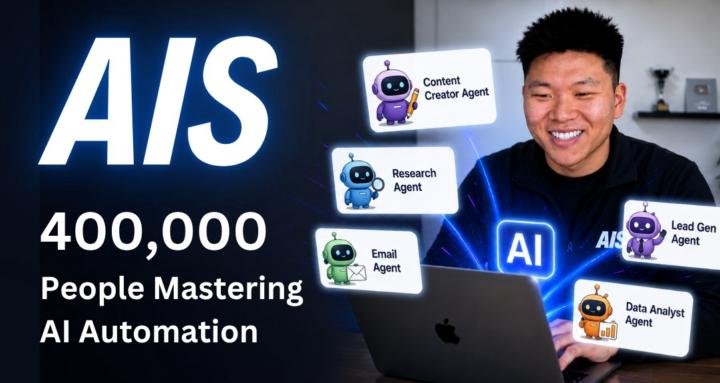
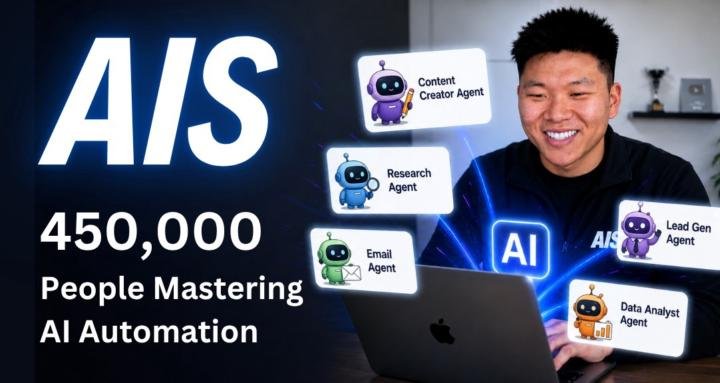
An AI agent can be designed to receive a goal, analyze information, use available tools, and complete a sequence of actions according to its instructions and permissions.
For example, an AI agent could be connected to research tools, databases, communication platforms, or other applications. Instead of generating only a single response, the agent may participate in a larger workflow involving multiple steps.
This creates a distinction between simple AI usage and agent-based automation. A chatbot might answer a question, while an AI agent can potentially perform a sequence of predefined tasks using connected tools.
Jack Roberts’ AI automation material explores this broader concept of using AI agents and connected systems to create practical automation workflows.
The Role of n8n in AI Automation
n8n is one of the workflow automation technologies that can be used to connect different applications and services.
It can act as the infrastructure connecting various parts of an automation. For example, a workflow can receive information from one service, process it using an AI model, and then send the result to another application.
This makes n8n relevant to AI automation because AI models often become more useful when they are connected to external tools, databases, APIs, and business applications.
In Jack Roberts’ course, n8n is one component of a broader AI automation ecosystem rather than the entire focus of the course.
What Can AI Automation Be Used For?
AI-powered workflows can be applied to many different processes, including:
Lead Generation: Automatically process new leads, organize information, qualify inquiries according to defined criteria, and send information to relevant systems.
Content Automation: Assist with research, content creation, repurposing, organization, and distribution.
Customer Support: Analyze customer messages, categorize requests, retrieve relevant information, and assist with responses.
Research: Collect information from connected sources, summarize findings, organize data, and prepare research outputs.
Business Operations: Connect applications and automate repetitive administrative processes.
Productivity: Reduce repetitive digital tasks and create workflows that move information between different tools.
Jack Roberts – AI Automations (June 2026)
AI Automations by Jack Roberts (June 2026) is a premium AI & Automation course designed for entrepreneurs, freelancers, agency owners, marketers, developers, and business professionals who want to build AI-powered workflows, automate repetitive operations, create intelligent systems, and develop scalable AI solutions for modern businesses.
Why Learn AI Automation?
Learning AI automation can provide a better understanding of how modern AI systems operate beyond simple prompting.
Instead of using AI as an isolated tool, learners can understand how AI models, agents, APIs, workflow platforms, and business applications can work together.
This can be particularly useful for entrepreneurs, marketers, agencies, creators, freelancers, and professionals who want to identify repetitive processes that could potentially be improved through automation.
Jack Roberts’ AI Automations course provides a practical context for exploring these concepts through AI workflows, agents, integrations, and business automation.
Final Thoughts
AI automation represents a shift from using artificial intelligence for individual tasks toward building connected systems that can handle multiple steps in a process.
AI-powered workflows can combine artificial intelligence with automation platforms, applications, APIs, data, and AI agents. When designed properly, these systems can help automate repetitive processes while allowing people to focus on tasks that require judgment, creativity, or direct decision-making.
For anyone interested in understanding how AI agents, workflow automation, integrations, and business systems can work together, Jack Roberts – AI Automations (June 2026) provides a practical introduction to this growing area of AI technology.
FAQs
What is AI automation?
AI automation combines artificial intelligence with automated workflows to perform tasks, process information, make decisions within defined rules, and trigger actions across connected applications.
How do AI-powered workflows work?
AI-powered workflows connect triggers, AI models, applications, and automated actions. Information enters the workflow, AI can process or interpret it, and the system then performs the next predefined action.
What are AI agents?
AI agents are AI-powered systems designed to work toward a defined goal by processing information and, when permitted, using connected tools to complete multiple steps.
What is n8n used for in AI automation?
n8n can connect different applications, APIs, AI models, and services to create automated workflows. It can serve as a workflow layer for connecting different components of an AI automation system.
Who is Jack Roberts?
Jack Roberts is an AI automation educator and creator whose work focuses on practical applications of AI, automation, AI agents, and connected digital workflows.
What is Jack Roberts’ AI Automations course?
Jack Roberts’ AI Automations course is a practical AI automation program covering areas such as AI workflows, AI agents, integrations, n8n, Claude Code, lead generation, content automation, customer support, and business automation.
Is AI automation only useful for large businesses?
No. AI automation can be applied to businesses, agencies, freelancers, creators, and individual professionals. The appropriate use depends on the specific workflow and the tasks being automated.
Can AI automation replace human work completely?
Not necessarily. AI automation is generally most useful for assisting with or automating suitable parts of a process. Human review can remain important for decisions, quality control, sensitive information, and tasks where AI output may be unreliable.