What Is Social Media Marketing and How Does It Work?
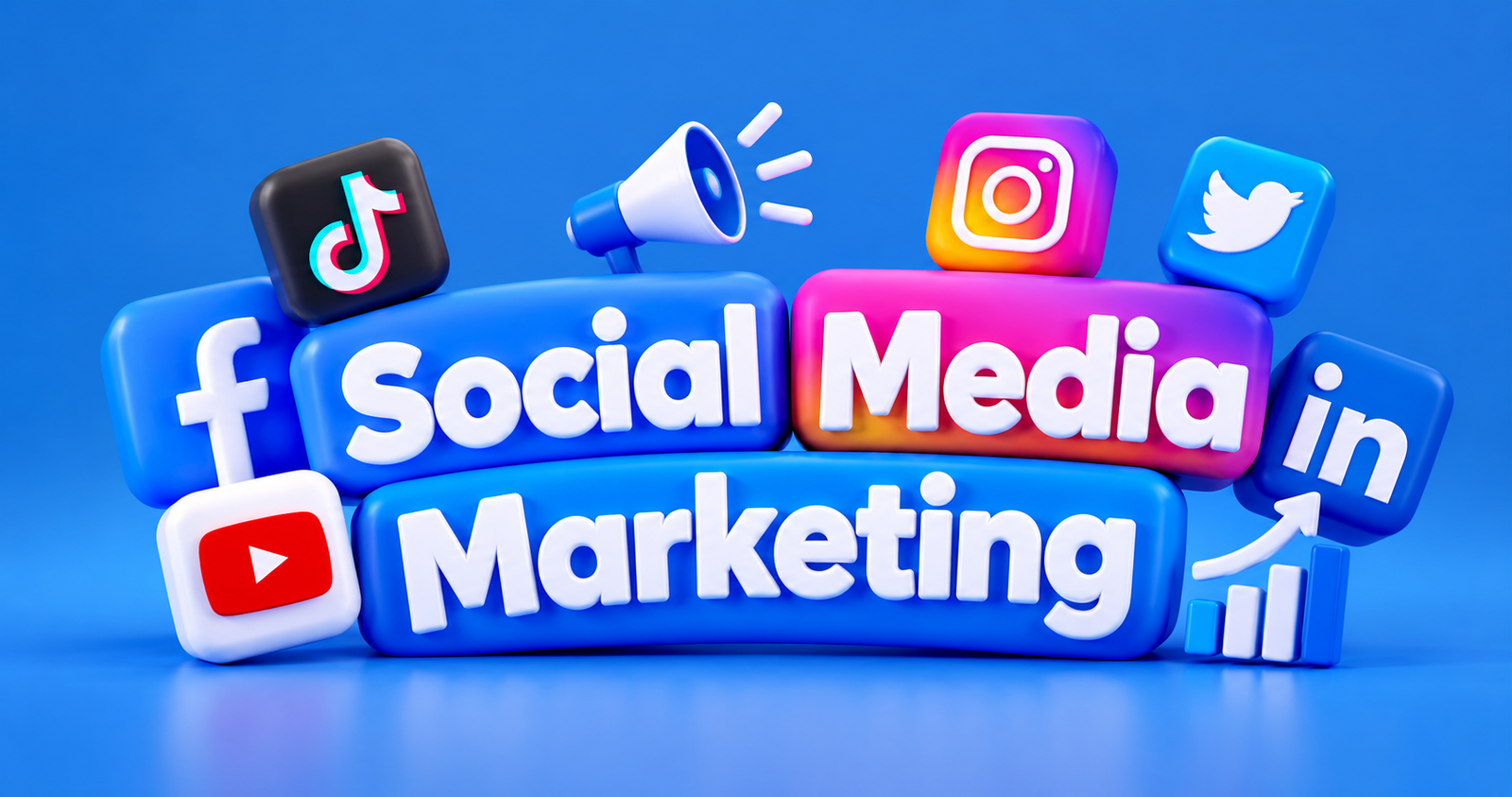
Social media marketing is the practice of using social media platforms to connect with an audience, build brand awareness, share valuable content, generate leads, support sales, and develop relationships with customers.
It is much more than simply publishing posts.
Modern social media marketing can involve content creation, audience research, community engagement, social listening, analytics, influencer collaborations, customer service, and paid promotion. Hootsuite describes these as important components of a broader social media marketing approach.
Social platforms have also evolved into places where people discover brands, research products, communicate with businesses, watch content, make purchases, and participate in communities. Sprout Social’s 2026 guide describes social media marketing as combining content, engagement, paid advertising, influencer partnerships, social listening, and customer care.
This makes social media marketing an important part of modern digital marketing.
What Is Social Media Marketing?
Social media marketing is the strategic use of social media platforms to reach and engage a target audience while supporting specific marketing or business objectives.
Businesses can use social media to:
- Build brand awareness
- Reach new audiences
- Publish useful content
- Communicate with customers
- Build communities
- Generate leads
- Drive website traffic
- Support sales
- Provide customer service
- Understand audience interests
- Build long-term relationships
HubSpot defines social media marketing as creating content for social platforms to promote products or services, build community, and drive business traffic.
The key word is strategic.
A business that randomly posts content is using social media, but it does not necessarily have a social media marketing strategy.
How Does Social Media Marketing Work?
Social media marketing generally works through a cycle:
Research → Set Goals → Choose Platforms → Create Content → Publish → Engage → Measure → Improve
First, a business identifies the audience it wants to reach.
Next, it establishes clear objectives.
The business then chooses appropriate platforms and develops content designed for its audience.
After publishing, the business interacts with users and monitors performance.
Analytics provide information about what is working.
The strategy can then be adjusted based on the results.
Buffer’s 2026 strategy framework similarly emphasizes goals, audience research, content pillars, platform selection, content scheduling, analytics, and ongoing refinement.
Why Is Social Media Marketing Important?
Social media has become an important environment for discovery, communication, entertainment, research, shopping, and customer interaction.
This gives businesses an opportunity to communicate with people where they already spend time online.
Social media marketing can help businesses:
- Increase visibility
- Reach targeted audiences
- Develop brand recognition
- Build relationships
- Generate leads
- Increase website traffic
- Support sales
- Gather customer feedback
- Improve customer service
- Build communities
The value is not limited to follower counts.
A smaller but relevant and engaged audience can be more valuable than a large audience with little connection to the business.
What Are the Main Goals of Social Media Marketing?
Different businesses can use social media for different objectives.
Brand Awareness
Social platforms can introduce a brand to people who have never encountered it before.
Audience Growth
Businesses can use valuable content to attract relevant followers and build an audience.
Engagement
Comments, shares, saves, messages, and conversations can help businesses develop relationships with their audience.
Lead Generation
Social content can encourage interested people to take actions such as visiting a website or requesting information.
Website Traffic
Social platforms can direct audiences toward websites, landing pages, articles, products, or other resources.
Sales
Social media can support purchasing decisions and, in some cases, facilitate transactions directly.
Customer Relationships
Businesses can use social platforms to answer questions, respond to feedback, and maintain relationships.
Community Building
Brands can create spaces where customers and followers interact around shared interests.
What Are the Main Types of Social Media Marketing?
Social media marketing includes several connected activities.
Organic Social Media Marketing
Organic marketing involves content and interactions that do not depend on paying for individual advertisements.
Examples include:
- Posts
- Videos
- Stories
- Educational content
- Community conversations
- Comments
- Live sessions
Social Media Advertising
Paid social advertising allows businesses to promote content or offers to selected audiences.
Paid social can support objectives such as awareness, traffic, leads, or sales.
Social Media Content Marketing
This focuses on creating useful, entertaining, educational, or informative content for social audiences.
Community Management
Community management involves interacting with followers, answering questions, responding to comments, and developing relationships.
Social Listening
Social listening involves monitoring conversations, mentions, discussions, and audience sentiment to understand what people are saying about a brand or topic.
Influencer Marketing
Businesses can collaborate with creators or influencers whose audiences align with their target market.
Social Customer Service
Social platforms can also become channels for answering customer questions and resolving issues.
Hootsuite’s current definition includes content creation, publishing, analytics, social listening, community management, advertising, and ROI measurement among core social media marketing activities.
What Platforms Are Used for Social Media Marketing?
Different platforms attract different audiences and support different content formats.
Common platforms used for marketing include:
- TikTok
- YouTube
- X
- Other emerging or specialized social platforms
The best platform is not automatically the one with the largest number of users.
The better question is:
Where does your target audience actually spend time and engage with content?
Buffer’s 2026 guidance recommends choosing platforms based on audience fit and available resources rather than trying to maintain a presence everywhere.
How Do You Choose the Right Social Media Platform?
Start with the audience.
Ask:
- Who are you trying to reach?
- What content do they consume?
- Which platforms do they use?
- What format works well there?
- What resources can your business realistically manage?
For example, a professional B2B audience may behave differently from an audience interested in entertainment or visual products.
There is no universal best platform.
The right platform is the one where your audience and business objectives overlap.
What Is a Social Media Marketing Strategy?
A social media marketing strategy is a documented plan describing how a business will use social platforms to achieve specific objectives.
A strategy normally defines:
- Target audience
- Goals
- Platforms
- Content themes
- Content formats
- Publishing approach
- Engagement approach
- Measurement
- Improvement process
Buffer’s 2026 definition emphasizes four fundamental questions: where, who, what, and how will success be measured?
Without a strategy, businesses can easily fall into a cycle of posting content without knowing why they are publishing it.
How Do You Create a Social Media Marketing Strategy?
A practical strategy can be developed through several steps.
1. Define Your Goals
Start with the business result you want social media to support.
For example:
- Increase awareness
- Generate leads
- Increase sales
- Build a community
- Improve customer relationships
2. Identify Your Audience
Understand the people you want to reach.
Consider their:
- Interests
- Problems
- Goals
- Behaviors
- Content preferences
- Platform preferences
3. Analyze Your Existing Presence
If the business already has social accounts, review existing performance.
Identify:
- Best-performing content
- Weak-performing content
- Audience engagement
- Traffic
- Conversions
- Platform performance
4. Select Platforms
Choose the platforms that provide the strongest audience and business fit.
5. Define Content Pillars
Content pillars are recurring themes that keep your social content organized.
For example, a business might use:
- Education
- Industry insights
- Customer stories
- Product information
- Behind-the-scenes content
6. Create a Content Calendar
Plan what content will be published and when.
7. Measure Results
Track the metrics that connect directly to your goals.
8. Improve the Strategy
Use performance data to determine what should be continued, changed, or stopped.
Current 2026 guidance from Buffer recommends treating social media strategy as an ongoing cycle rather than a one-time plan.
What Types of Content Work on Social Media?
Social media supports many different content formats.
Short-Form Video
Short videos can communicate ideas quickly and can be adapted to different platforms.
Images and Graphics
Visual content can communicate information, ideas, announcements, and brand messages.
Educational Posts
Educational content can answer questions and demonstrate expertise.
Stories
Temporary or frequently updated content can provide more informal communication.
Live Content
Live sessions can support real-time interaction.
User-Generated Content
Content created by customers or community members can provide social proof and encourage participation.
Product Content
Businesses can showcase products, features, demonstrations, and use cases.
Customer Stories
Testimonials and customer experiences can demonstrate real-world value.
Polls and Interactive Content
Interactive formats can encourage audience participation and provide useful feedback.
What Is Social Media Engagement?
Social media engagement refers to the interactions people have with a business’s content or account.
Examples include:
- Likes
- Comments
- Shares
- Saves
- Clicks
- Mentions
- Direct messages
- Replies
- Profile visits
However, engagement is more than numbers.
A thoughtful comment or customer conversation can be more meaningful than a simple interaction.
Social media creates an opportunity for two-way communication that traditional one-directional advertising often cannot provide as directly.
Why Is Community Important in Social Media Marketing?
A community consists of people who regularly interact around a shared interest, brand, topic, or purpose.
Strong communities can help businesses develop:
- Trust
- Loyalty
- Advocacy
- Feedback
- Customer relationships
- User-generated content
Instead of treating followers as numbers, community-focused marketing treats them as people participating in an ongoing relationship.
This is becoming particularly important as social platforms increasingly function as discovery and discussion environments.
What Is Social Media Advertising?
Social media advertising is paid promotion on social platforms.
A business can generally define objectives, select an audience, create an advertisement, establish a budget, and measure results.
Paid social can help businesses reach audiences beyond their existing followers.
Common objectives include:
- Awareness
- Traffic
- Engagement
- Lead generation
- Sales
Hootsuite’s 2026 advertising guide notes that major social advertising systems generally use auction-based processes in which advertisers define objectives, audiences, formats, and budgets.
Paid advertising is therefore one part of social media marketing rather than the entire discipline.
What Is Social Media Analytics?
Social media analytics involves collecting and interpreting performance data from social platforms.
Important metrics can include:
- Reach
- Impressions
- Engagement
- Shares
- Saves
- Video views
- Profile visits
- Link clicks
- Leads
- Conversions
- Follower growth
The correct metric depends on the objective.
For example, if the goal is awareness, reach may matter more than direct sales.
If the goal is lead generation, leads and conversion rates become more important.
HubSpot’s current social analytics documentation includes audience, campaigns, channels, content types, and other performance information among social reporting concepts.
What Is the Difference Between Social Media Marketing and Social Media Management?
The terms are closely related but not identical.
Social media marketing focuses on using social platforms to achieve marketing and business objectives.
Social media management generally focuses more on the day-to-day operation of social accounts.
Management can include:
- Publishing
- Scheduling
- Responding to comments
- Managing messages
- Monitoring accounts
- Maintaining the content calendar
Marketing is broader because it includes strategy, objectives, audience research, campaigns, measurement, and business outcomes.
What Are the Benefits of Social Media Marketing?
Social media marketing can provide several benefits.
Greater Brand Visibility
Businesses can reach audiences beyond their existing customers.
Direct Communication
Brands can communicate directly with audiences.
Audience Insights
Social conversations can provide information about customer interests and concerns.
Community Building
Businesses can develop communities around shared interests.
Lead Generation
Social content can help attract potential customers.
Sales Support
Social media can influence discovery, evaluation, and purchasing decisions.
Customer Feedback
Businesses can learn from comments, messages, reviews, and conversations.
Content Distribution
Social platforms can distribute content to existing and new audiences.
Measurable Results
Social platforms provide performance data that can be used to improve strategy.
What Are the Challenges of Social Media Marketing?
Social media marketing also has challenges.
Competition
Millions of businesses and creators compete for attention.
Algorithm Changes
Platform systems and recommendation mechanisms can change.
Content Fatigue
Audiences can become tired of repetitive or low-value content.
Consistency
Maintaining quality requires planning and resources.
Negative Feedback
Public conversations can include criticism or complaints.
Measurement
Not every business outcome can be directly attributed to a single social post.
Platform Dependence
Businesses do not control the platforms they use.
Rapid Changes
Trends, formats, user behavior, and platform features can change quickly.
These challenges make strategy and adaptability important.
How Does AI Affect Social Media Marketing?
Artificial intelligence is increasingly being used throughout social media workflows.
AI can assist with:
- Content ideation
- Drafting
- Content variations
- Audience analysis
- Social listening
- Performance analysis
- Scheduling workflows
- Personalization
- Customer-response assistance
However, AI should support strategy rather than replace human judgment.
Brand voice, accuracy, originality, context, and audience understanding still matter.
HubSpot’s 2026 research reports that AI is increasingly embedded in marketers’ content workflows, while also highlighting major shifts toward interest-based discovery, social search, and AI-assisted content.
Can Social Media Marketing Generate Sales?
Yes.
Social media can contribute to sales by helping customers:
Discover → Research → Evaluate → Engage → Purchase → Share
However, not every post should attempt to sell something.
Educational, entertaining, community-focused, and informative content can help build the relationship that eventually supports a purchase.
Social media can therefore contribute to both short-term conversions and long-term brand development.
Can Beginners Learn Social Media Marketing?
Yes.
A beginner can learn social media marketing by understanding the fundamentals and practicing consistently.
A useful learning path is:
Learn the basics → Understand audiences → Choose a platform → Create content → Engage → Measure → Improve
Beginners should focus on learning the principles instead of trying to master every platform at once.
What Skills Are Needed for Social Media Marketing?
Important skills include:
- Content creation
- Communication
- Audience research
- Copywriting
- Creativity
- Social media strategy
- Analytics
- Community management
- Trend awareness
- Basic design
- Video content
- Marketing fundamentals
- Customer understanding
- AI-assisted workflows
You do not need to master every skill immediately.
A strong marketer can develop these capabilities progressively.
Why Are Social Media Marketing Courses Useful?
Social Media Marketing Courses can provide a structured learning path for people who want to understand the complete discipline.
A good course may cover:
- Social media fundamentals
- Audience research
- Platform strategy
- Content creation
- Content planning
- Community building
- Social advertising
- Analytics
- Social selling
- AI tools
- Strategy development
Courses can be particularly useful for beginners because they connect individual techniques to a broader marketing strategy.
Products by Category
-
Adley Kinsman – The Double Your Reach Challenge
Original price was: $199.00.$24.00Current price is: $24.00. -
Brooke Apffel – Paid Social Ads Masterclass
Original price was: $1,499.00.$30.00Current price is: $30.00. -
Cowboy Leisure-Reel Saloon 3
Original price was: $399.00.$14.00Current price is: $14.00. -
EcomChigga-Tweet Printer – The Claude System
Original price was: $100.00.$20.00Current price is: $20.00. -
Hannah Neville-The Hype House Blueprint
Original price was: $899.00.$25.00Current price is: $25.00. -
Ian Bower & Dan Meadors – Every Swipe Pays
Original price was: $2,497.00.$34.00Current price is: $34.00. -
Juliete Mirella – Viral Threads GPT
Original price was: $87.00.$20.00Current price is: $20.00. -
Kallaway – Short-Form Academy Programme (2026)
Original price was: $1,295.00.$29.00Current price is: $29.00. -
Massimo Seq – UGC OS (August 2026)
Original price was: $69.00.$15.00Current price is: $15.00.









How Can You Learn Social Media Marketing?
You can learn through:
- Social Media Marketing Courses
- Practical projects
- Industry guides
- Case studies
- Marketing communities
- Experimentation
- Analytics
- Mentorship
The most effective approach is to combine learning with practice.
For example, create a small content plan, publish consistently, measure the results, and use the data to improve your next cycle.
What Is the Future of Social Media Marketing?
Social media marketing is continuing to evolve from simple social networking toward a broader ecosystem involving discovery, search, shopping, entertainment, customer service, and community.
HubSpot’s 2026 research highlights several important trends, including interest-based discovery, social search, social commerce, short-form video, AI-assisted workflows, and community building.
This means future social media marketing will likely depend increasingly on:
- High-quality content
- Audience relevance
- Community
- Authentic engagement
- Short-form and visual content
- Social search
- Social commerce
- AI-assisted workflows
- Data-driven decision-making
- Strong brand identity
The most successful businesses will not necessarily be those that publish the most.
They will be those that understand their audience and consistently provide content and experiences people actually value.
Where Can You Learn Social Media Marketing?
Social media marketing can be learned through courses, practical experience, industry resources, case studies, and experimentation.
For learners who want structured education, CourseCanvass provides a place to explore courses related to social media marketing, content, digital marketing, advertising, personal branding, and other growth skills.
Explore Social Media Marketing Courses
If you want to develop practical skills in social media strategy, content creation, audience growth, engagement, analytics, and modern social marketing, explore the Social Media Marketing courses available on CourseCanvass.
Whether you are a beginner, marketer, creator, freelancer, entrepreneur, or business owner, learning social media marketing can help you understand how social platforms can support broader business goals.
Final Thoughts
Social media marketing is much more than posting content and collecting followers.
It is a strategic approach to using social platforms to reach audiences, communicate with customers, build communities, distribute content, generate opportunities, and support business growth.
A successful strategy begins with understanding the audience and setting clear objectives.
From there, businesses choose appropriate platforms, develop useful content, engage with their communities, analyze performance, and continuously improve.
The most important principle is simple:
Do not use social media just to be present. Use it with a clear purpose, a clear audience, and a clear reason for every major activity.
As social platforms continue to evolve into discovery, search, shopping, entertainment, and communication ecosystems, businesses that focus on relevance, authenticity, useful content, and meaningful relationships will be better positioned for long-term success.
FAQs
What is social media marketing?
Social media marketing is the strategic use of social media platforms to reach audiences, build awareness, create engagement, generate leads, support sales, and develop customer relationships.
How does social media marketing work?
It works through a cycle of audience research, goal setting, platform selection, content creation, publishing, engagement, measurement, and continuous improvement.
Why is social media marketing important?
It allows businesses to reach audiences, communicate directly with customers, build communities, distribute content, generate leads, support sales, and gather valuable feedback.
What are the main types of social media marketing?
Major activities include organic social media, paid advertising, content marketing, community management, social listening, influencer marketing, and social customer service.
Which social media platform is best for marketing?
There is no single best platform. The right platform depends on the target audience, business objectives, content format, available resources, and industry.
What is a social media marketing strategy?
It is a documented plan defining the target audience, goals, platforms, content approach, publishing process, and metrics used to measure success.
Is social media marketing the same as social media management?
No. Social media management focuses primarily on operating social accounts, while social media marketing covers the broader strategy and business objectives behind social activity.
What skills are needed for social media marketing?
Useful skills include content creation, communication, audience research, copywriting, creativity, analytics, community management, strategy, and marketing fundamentals.
Can beginners learn social media marketing?
Yes. Beginners can learn the fundamentals through courses, practical projects, experimentation, analytics, and consistent practice.
Can AI be used in social media marketing?
Yes. AI can assist with content ideas, drafting, analysis, personalization, social listening, and workflow automation. Human judgment remains important for strategy, accuracy, creativity, and brand voice.
Does social media marketing require paid advertising?
No. Businesses can use organic content and community engagement without paid advertising. Paid advertising is an additional component that can expand reach and support specific objectives.
How long does social media marketing take to work?
Results vary depending on the business, audience, platform, content, goals, and consistency. Social media strategy generally requires ongoing testing and measurement rather than judging success from a few individual posts. Buffer’s 2026 guidance recommends giving strategies sufficient time to generate meaningful performance data before making major changes.