What Makes Jana Osofsky’s High-Leverage Content Different?
Creating content consistently can become one of the most time-consuming parts of running an online business.
Many coaches, consultants, practitioners, and service providers feel pressure to constantly create social-media posts, videos, emails, and other marketing material. Jana Osofsky’s High-Leverage Content approaches this problem from a different direction: instead of treating content as something that needs to be produced every day, the program focuses on creating a strategic library of evergreen, long-form content that can continue working for a business over time.
Jana Osofsky describes High-Leverage Content as a program for coaches, practitioners, and service providers that teaches a blog-first content strategy designed to help turn expertise into content that can attract and convert potential clients.
The program combines content strategy, planning, long-form writing, conversion-focused content, repurposing, and tools designed to make the content-creation process more systematic.
What Is Jana Osofsky’s High-Leverage Content?
High-Leverage Content is a self-paced content-strategy course created by Jana Osofsky.
The program’s central concept is to create a collection of evergreen blog posts that can continue attracting and educating an audience instead of depending entirely on constantly publishing new social-media content.
Jana describes this as a “capsule library” of content. The system is intended to help businesses organize their expertise into specific pieces of content that address the questions, problems, goals, objections, and decisions of their potential clients.
The current course curriculum includes strategy and planning, content creation, conversion-focused content, blog publishing, email-list development, and additional training resources.
Who Is Jana Osofsky?
Jana Osofsky is a content strategist whose work focuses on helping coaches, practitioners, and service providers use content to attract potential clients.
Her official course page positions her as the instructor behind High-Leverage Content and describes the program as being based on the content system she uses in her own business and with clients.
Her approach places particular emphasis on long-form content, strategic blogging, thought leadership, and creating content around the information potential clients need before they are ready to purchase.
What Can You Learn From High-Leverage Content?
The program covers several parts of a content-marketing system.
1. Content Strategy and Planning
One of the first areas covered is strategic content planning.
Instead of starting with random content ideas, students are taught to determine what their content needs to accomplish and which subjects are most relevant to their business and audience.
The curriculum includes lessons around choosing an offer, clarifying business fundamentals, identifying problems, goals, aspirations, myths, and mistakes, and selecting appropriate content topics.
This gives content creation a strategic foundation.
2. The 9-in-2 Content Pillars
A major concept in High-Leverage Content is the 9-in-2 Content Pillars framework.
The framework divides content into two broad groups:
Expertise-focused content
- Solving Problems
- Goals & Desires
- Busting Myths
- Fixing Mistakes
Conversion-focused content
- Your Why Story
- Framework or Signature Process
- Showcase Results
- Offer Questions
- Counter Objections
These nine content types are designed to cover different questions a potential customer may have before purchasing.
This is one of the defining concepts of the program.
3. Evergreen Blog Content
The course strongly emphasizes evergreen blog content.
Evergreen content is designed to remain useful over a longer period instead of being relevant only for a few days.
A well-planned article can answer a recurring question, explain a problem, introduce an approach, or address an objection for potential customers who discover the article weeks or months after publication.
High-Leverage Content uses this principle to build a larger library of blog posts that can continue supporting marketing efforts over time.
4. Thought Leadership Content
The program also teaches learners how to turn their expertise into thought-leadership content.
The objective is not simply to publish generic information. Instead, the content should communicate the creator’s perspective, knowledge, processes, and experience.
The curriculum includes a thought-leadership checklist and strategic outlines designed to help students develop this type of content.
5. A Structured Writing Process
High-Leverage Content includes a four-step writing process for creating long-form content.
The course also provides training around:
- Headlines
- Titles
- Calls to action
- Blog formatting
- Long-form writing
- Content outlines
- Content planning
The goal is to make writing more structured so that the creator does not have to start from a blank page every time.
6. Strategic Content Outlines
Another major resource is a collection of strategic content outlines.
The official course page says students receive nine HLC strategic content outlines, along with ChatGPT ideation prompts. These are intended to guide the structure of different types of content.
This can be useful for people who understand their subject but struggle with deciding how to organize their ideas into a complete article.
7. ChatGPT for Content Planning
The curriculum also includes training on using ChatGPT for content strategy and planning.
Rather than treating AI simply as a tool for generating finished articles, the course incorporates ChatGPT into the planning process.
The published curriculum includes ChatGPT basics for content strategy and planning as well as prompts incorporated into the strategic content outlines.
This can help with brainstorming topics and exploring ideas while keeping the underlying strategy connected to the business and its audience.
8. Conversion-Focused Content
A major distinction of the program is its focus on content that supports conversion.
The course does not treat every article as simply an informational piece.
Its conversion-focused content includes areas such as:
- Your story
- Frameworks and processes
- Results
- Questions about offers
- Customer objections
These content types are intended to help potential customers understand the value of an offer and become more prepared to make a purchasing decision.
9. Calls to Action
The program also teaches students to think about calls to action when creating blog content.
A useful article should give the reader an appropriate next step.
Depending on the business, this could involve:
- Joining an email list
- Booking a consultation
- Exploring an offer
- Downloading a resource
- Learning more about a service
The curriculum specifically includes training around identifying the CTAs that will be used in blog posts.
10. Content Repurposing
High-Leverage Content also covers repurposing.
The idea is that one substantial piece of long-form content can become the foundation for additional marketing material.
Instead of creating every piece of content independently, businesses can use their main blog content as a source for other formats and channels.
The official program describes its approach as a content creation and repurposing system.
Why Is High-Leverage Content Useful?
The main usefulness of the program comes from its structured approach.
Instead of asking:
“What should I post today?”
the system encourages a business to ask:
“What information does my potential client need before they are ready to buy?”
That shift can make content planning more purposeful.
For a service business, content can explain problems, demonstrate expertise, address objections, explain the business’s process, and help potential clients understand an offer.
The program therefore connects content strategy with client acquisition rather than treating publishing as an end in itself.
What Are the Benefits?
Potential benefits of learning the High-Leverage Content approach include:
- Creating a structured content strategy
- Developing evergreen blog content
- Organizing expertise into useful articles
- Planning content around customer needs
- Creating thought-leadership content
- Developing conversion-focused articles
- Using strategic writing outlines
- Using ChatGPT during content planning
- Improving blog structure
- Developing stronger calls to action
- Repurposing long-form content
- Reducing dependence on constant content ideation
The official program also provides lifetime access to its lessons, materials, and tools, according to the current course page.
Who Is High-Leverage Content For?
The program is primarily designed for:
- Coaches
- Consultants
- Practitioners
- Service providers
- Online experts
- Knowledge-based businesses
- Personal brands
- Entrepreneurs who sell expertise
Jana’s own positioning specifically highlights coaches, practitioners, and service providers.
It can also be relevant to businesses that already have expertise but struggle to turn that knowledge into organized marketing content.
Is It Suitable for Beginners?
The program is designed to be self-paced and its published material indicates that it can be used by both beginners and more experienced entrepreneurs.
However, someone completely new to business may get less immediate value from a conversion-focused content strategy because many of the lessons assume that the learner has an offer, expertise, or service that they want to market.
For someone who already knows what they sell, the strategic planning framework can be easier to apply.
What Makes High-Leverage Content Different?
The most notable difference is its blog-first approach.
Many content strategies focus heavily on publishing frequently across social-media platforms.
High-Leverage Content instead emphasizes creating a smaller library of strategic, evergreen content that can continue serving a business over time.
Jana describes this approach as becoming “social media optional,” with blog content acting as a long-term marketing asset.
The program also combines strategy and implementation. Students are not simply given a list of content ideas; they receive frameworks, outlines, planning tools, writing processes, and prompts.
What Support Is Included?
The current official program describes several support resources.
These include a student-only Facebook group where students can ask questions and share their progress, as well as monthly live Zoom support calls.
The program itself is self-paced, meaning learners can move through the material according to their own schedule.
The course page states that students receive lifetime access to the lessons and materials.
What Are the Limitations?
High-Leverage Content is specifically oriented toward content marketing and client acquisition for expertise-based businesses.
That means it may not cover every area required to build a complete marketing system.
For example, someone looking specifically for advanced paid advertising, technical SEO, e-commerce operations, product development, or sales-team management would need additional training outside this program.
Another consideration is implementation.
A framework can make content planning more organized, but the business still needs strong expertise, useful offers, appropriate audience targeting, and consistent execution.
The program’s claims about improving conversion or reducing content-creation time are presented by Jana Osofsky as part of the program’s marketing material; they should be understood as program claims rather than guaranteed results.
What Skills Can You Develop?
Studying High-Leverage Content can help develop skills in:
- Content strategy
- Blog planning
- Long-form writing
- Thought leadership
- Content ideation
- Content organization
- Conversion-focused writing
- Calls to action
- Content repurposing
- Evergreen content development
- Audience-focused messaging
- Content marketing
- Strategic use of ChatGPT
These skills can be particularly useful for businesses where expertise and education play an important role in the buying process.
How Does High-Leverage Content Approach Social Media?
The program does not necessarily treat social media as the center of a content strategy.
Instead, its published approach is to build a strong library of long-form blog content and then repurpose that material for other channels.
This creates a different workflow:
Strategy → Long-form content → Blog library → Repurposing → Additional channels
Rather than continuously starting from scratch, the business can use its strongest ideas multiple times in different formats.
How Can High-Leverage Content Help With Client Acquisition?
Content can help potential clients move through different stages of the buying process.
For example:
Problem-focused article
A potential client discovers an answer to a problem.
Expertise-focused content
They learn how the business approaches that problem.
Framework or process
They see a practical methodology.
Results content
They understand what the approach can accomplish.
Objection content
Their concerns are addressed.
Offer-focused content
They learn how the service or program can help them.
This is consistent with the nine content pillars used in the High-Leverage Content system.
What Does the Current Curriculum Include?
The current official curriculum includes:
Orientation
An introduction to the High-Leverage Content system and its publishing process.
Strategy & Planning
Planning expertise-focused and conversion-focused content using the program’s frameworks and worksheets.
Content Creation
A structured writing process, strategic outlines, headlines, CTAs, and blog formatting.
Anti-Perfectionism Protocol
A specific process designed to help students publish rather than continually delay content.
Problem-Solving Content
Training around content such as solving problems, goals and desires, myths, and mistakes.
Conversion-Focused Content
Training around stories, frameworks, results, offer questions, and objections.
Social Media Optional
A section on using blog content as the foundation for a broader marketing system.
Email List
Training around starting, growing, and communicating with an email list.
Bonuses
The current curriculum also lists sales-email templates, guest training, LinkedIn-related content training, lead-magnet topic training, and additional resources.
Where Can You Learn High-Leverage Content?
The current official course is hosted through Jana O. Media’s Teachable course platform.
The official course page currently lists High-Leverage Content with lifetime access, and the displayed pay-in-full price is $997, with several payment-plan options also shown. Pricing can change, so the current official page should be checked before relying on a price.
Official course: Jana O. Media – High-Leverage Content
Final Thoughts
Jana Osofsky’s High-Leverage Content takes a strategic, blog-first approach to content marketing.
Instead of making content simply because a business needs something to publish, the program focuses on identifying what potential clients need to understand and then turning that information into a structured library of evergreen content.
Its framework combines expertise-focused content, conversion-focused content, strategic planning, long-form writing, ChatGPT-assisted ideation, calls to action, repurposing, and email-list development.
For coaches, consultants, practitioners, and service providers, the approach provides a way to connect content creation more directly with expertise, audience education, and client acquisition.
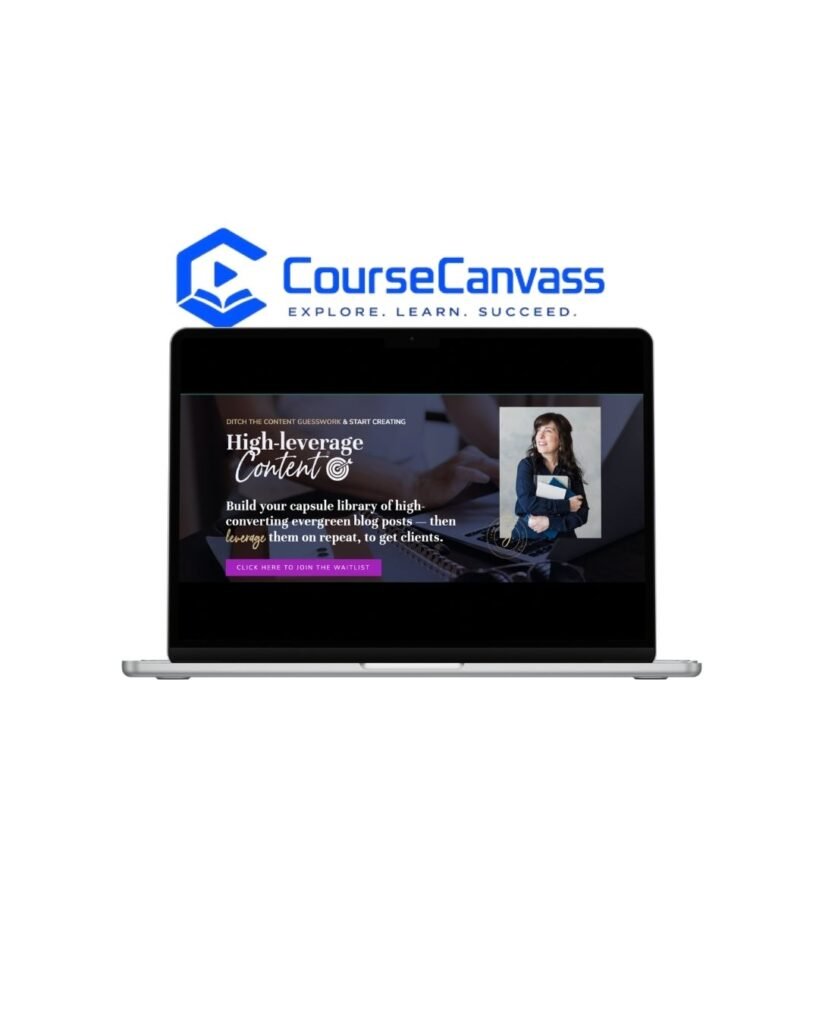
Jana Osofsky-High-Leverage Content
High-Leverage Content by Jana Osofsky (2026) is a premium Content Marketing course designed for entrepreneurs, creators, marketers, consultants, agency owners, freelancers, coaches, educators, and business owners who want to create strategic content that builds authority, attracts audiences, and drives long-term business growth.
FAQs
What is Jana Osofsky’s High-Leverage Content?
High-Leverage Content is a content-strategy program created by Jana Osofsky for coaches, practitioners, and service providers. It focuses on creating strategic evergreen blog content that can support marketing and client acquisition over time.
What does High-Leverage Content teach?
It teaches content strategy, planning, long-form writing, thought leadership, conversion-focused content, blog creation, content repurposing, calls to action, and the strategic use of ChatGPT for content planning.
What are the 9-in-2 Content Pillars?
The framework contains four expertise-focused content types and five conversion-focused types, covering areas such as problems, goals, myths, mistakes, stories, frameworks, results, offers, and objections.
Is High-Leverage Content about blogging?
Blogging is a major part of the program. Its strategy centers on building a “capsule library” of evergreen blog content that can continue supporting a business after publication.
Does the program teach ChatGPT?
Yes. The current curriculum includes ChatGPT basics for content strategy and planning, along with ChatGPT ideation prompts integrated into the program’s strategic content outlines.
Is High-Leverage Content self-paced?
Yes. The official course page describes it as a self-paced course with lifetime access to the lessons and materials.
Who is High-Leverage Content designed for?
It is primarily designed for coaches, practitioners, service providers, and other expertise-based businesses that want to turn their knowledge into strategic marketing content.
Does High-Leverage Content replace social media?
Its approach is to make a business less dependent on constant social-media publishing by building a strong evergreen blog-content library and repurposing that content across other channels. It does not mean that every business should completely eliminate social media.