
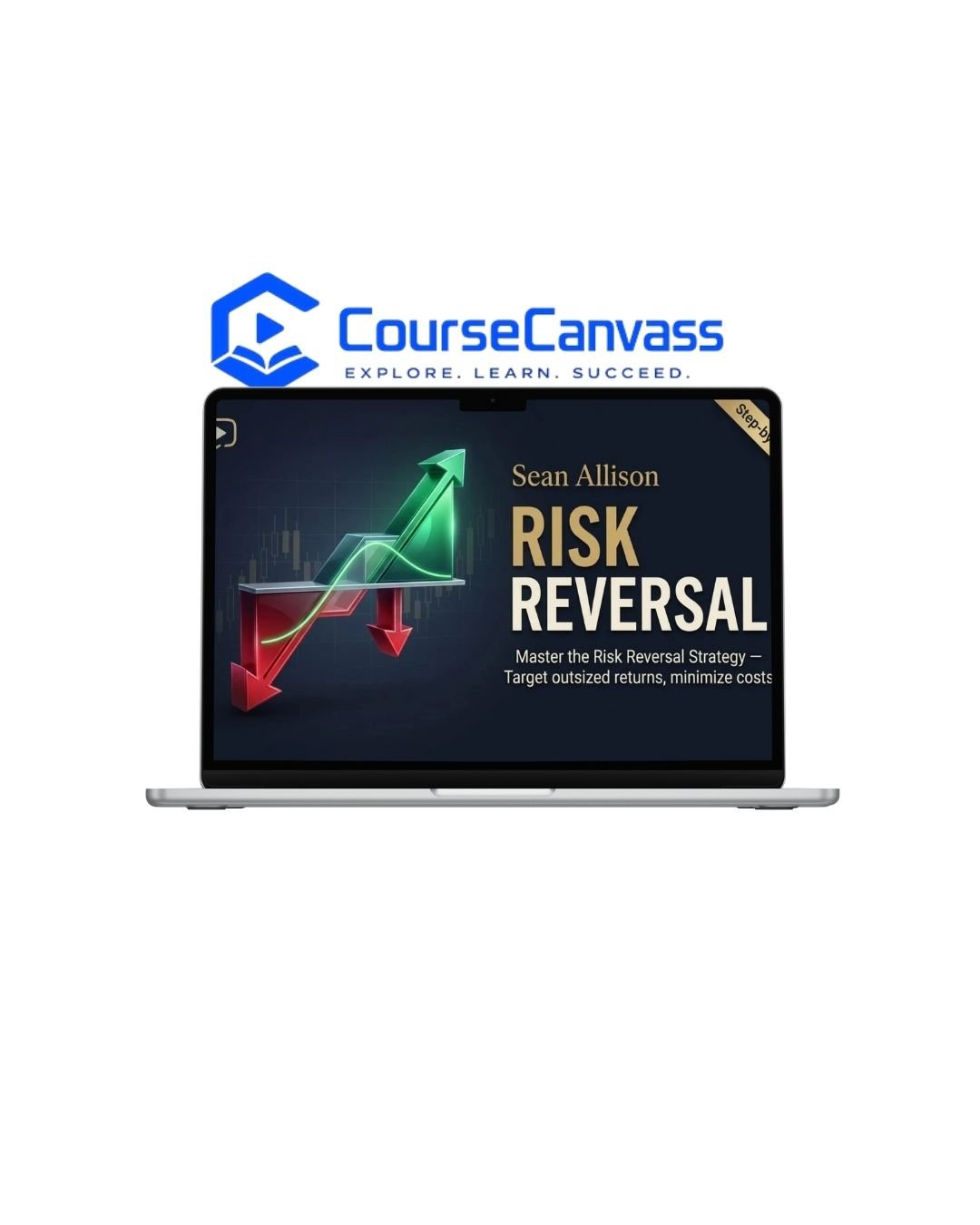
Sean Allison – Risk Reversal program (2026)
Original price was: $497.00.$24.00Current price is: $24.00.
Interested in purchasing this course?Contact us directly to receive your payment link. 🟢 Get Payment Link on WhatsApp
Risk Reversal Program by Sean Allison (2026) is a premium Sales Strategy course designed for entrepreneurs, sales professionals, consultants, coaches, agency owners, marketers, and business owners who want to strengthen their offers, reduce customer hesitation, improve sales conversations, handle objections, and create stronger conversion strategies through effective risk-reversal principles.
Description
Proof
Risk Reversal Program by Sean Allison is a comprehensive Sales Strategy course focused on improving how businesses structure offers, communicate value, address customer concerns, and reduce hesitation during the buying process. The program is designed for entrepreneurs, sales professionals, consultants, coaches, agency owners, marketers, and business owners who want to develop stronger sales systems and improve the effectiveness of their customer-acquisition strategies.
Customers often hesitate before making a purchase because they perceive uncertainty around price, results, implementation, suitability, or the overall value of an offer. Effective sales strategy involves understanding these concerns and communicating clearly enough to help suitable customers make informed decisions. Risk-reversal concepts can play an important role in creating greater confidence while maintaining a customer-focused approach.
The program begins with the fundamentals of sales strategy. Students explore how offers, positioning, customer needs, communication, trust, and purchasing decisions work together. Understanding these relationships provides a foundation for developing more effective sales processes.
A major focus of the curriculum is risk reversal. Participants examine how businesses can reduce perceived uncertainty by clearly communicating expectations, value, guarantees where appropriate, support, implementation processes, and customer outcomes. Responsible risk reversal should provide genuine value rather than making unrealistic promises.
The course also emphasizes offer positioning. Learners discover how to communicate what makes an offer useful, who it is designed for, and what problems it aims to address. Clear positioning can help potential customers determine whether a product or service is appropriate for their needs.
Customer psychology is another important component of the training. Students explore factors that can influence purchasing decisions, including trust, perceived value, uncertainty, credibility, urgency, and objections. Understanding these factors can help sales professionals communicate more effectively without relying on unnecessary pressure.
The curriculum also covers objection handling. Participants learn how to identify genuine concerns and respond with relevant information. Common objections may relate to price, timing, implementation, suitability, or perceived value. Addressing these questions clearly can create a more productive sales conversation.
Value communication receives significant attention throughout the program. Learners examine how to explain benefits, outcomes, features, and differentiators in ways that are relevant to customer needs. Strong value communication helps prospects understand why an offer may be worth considering.
The program also explores sales conversion strategies. Students examine how customer journeys, sales conversations, follow-up, offers, calls to action, and purchasing processes can be structured to reduce unnecessary friction. Improving these elements can create a smoother experience for potential customers.
Trust and credibility are integrated throughout the learning experience. Participants explore how testimonials, evidence, transparent communication, customer support, clear expectations, and professional presentation can contribute to buyer confidence. Trust is especially important when customers are evaluating unfamiliar products or services.
The course also addresses customer experience. Learners understand that effective sales strategy does not end when a purchase is completed. Clear onboarding, communication, support, and delivery can influence customer satisfaction and the long-term reputation of a business.
Sales process optimization is another valuable topic. Students can develop repeatable systems for qualifying prospects, presenting offers, responding to concerns, following up, and reviewing sales performance. Structured processes can help sales teams maintain consistency while identifying areas for improvement.
Performance measurement is also discussed. Participants can evaluate conversion rates, sales-cycle performance, objection patterns, customer feedback, and other relevant indicators to determine where improvements may be needed. Reviewing performance data allows businesses to refine their strategies over time.
The program encourages ethical sales practices throughout. Learners are encouraged to use transparent claims, realistic expectations, appropriate guarantees, and customer-focused communication. Risk reversal should strengthen legitimate offers rather than conceal weaknesses or pressure unsuitable customers into purchasing.
Whether you’re selling consulting services, coaching programs, agency services, professional products, or other offers, Risk Reversal Program by Sean Allison (2026) provides practical concepts for improving sales strategy, reducing customer hesitation, and creating stronger purchasing experiences.
By combining sales strategy, risk reversal, offer positioning, customer psychology, objection handling, value communication, trust building, conversion optimization, customer experience, and sales process improvement, Risk Reversal Program equips learners with practical knowledge for developing more effective and customer-focused sales systems.
FAQs
What is Risk Reversal Program?
It is a Sales Strategy course focused on risk reversal, offer positioning, objection handling, customer confidence, value communication, conversion optimization, and sales process improvement.
Who should take this course?
The course is ideal for entrepreneurs, sales professionals, consultants, coaches, agency owners, marketers, and business owners.
Is this course beginner-friendly?
Yes. It introduces sales strategy fundamentals before progressing to risk reversal, offer positioning, objection handling, customer psychology, and conversion strategies.
What topics are covered?
The course covers sales strategy, risk reversal, offer positioning, objection handling, customer psychology, value communication, trust building, conversion optimization, customer experience, and sales systems.
Why is risk reversal important in sales?
Effective risk reversal can reduce perceived uncertainty, clarify expectations, strengthen buyer confidence, address legitimate concerns, and make it easier for suitable customers to evaluate an offer.
Related products
-
Sale!

Matt Orclic-Ecomm Architics (2026) | E-commerce Course
Original price was: $9,999.00.$48.00Current price is: $48.00. -
Sale!

Charlie Morgan – Imperium Academy VIP (2026)
Original price was: $9,997.00.$40.00Current price is: $40.00. -
Sale!
Alex Robinson-Social Brand Club (2026)
Original price was: $4,444.00.$44.00Current price is: $44.00. -
Sale!
Hernan Vazquez-2 Rapid Scale Frameworks
Original price was: $23.00.$5.00Current price is: $5.00.

Reviews
There are no reviews yet.