
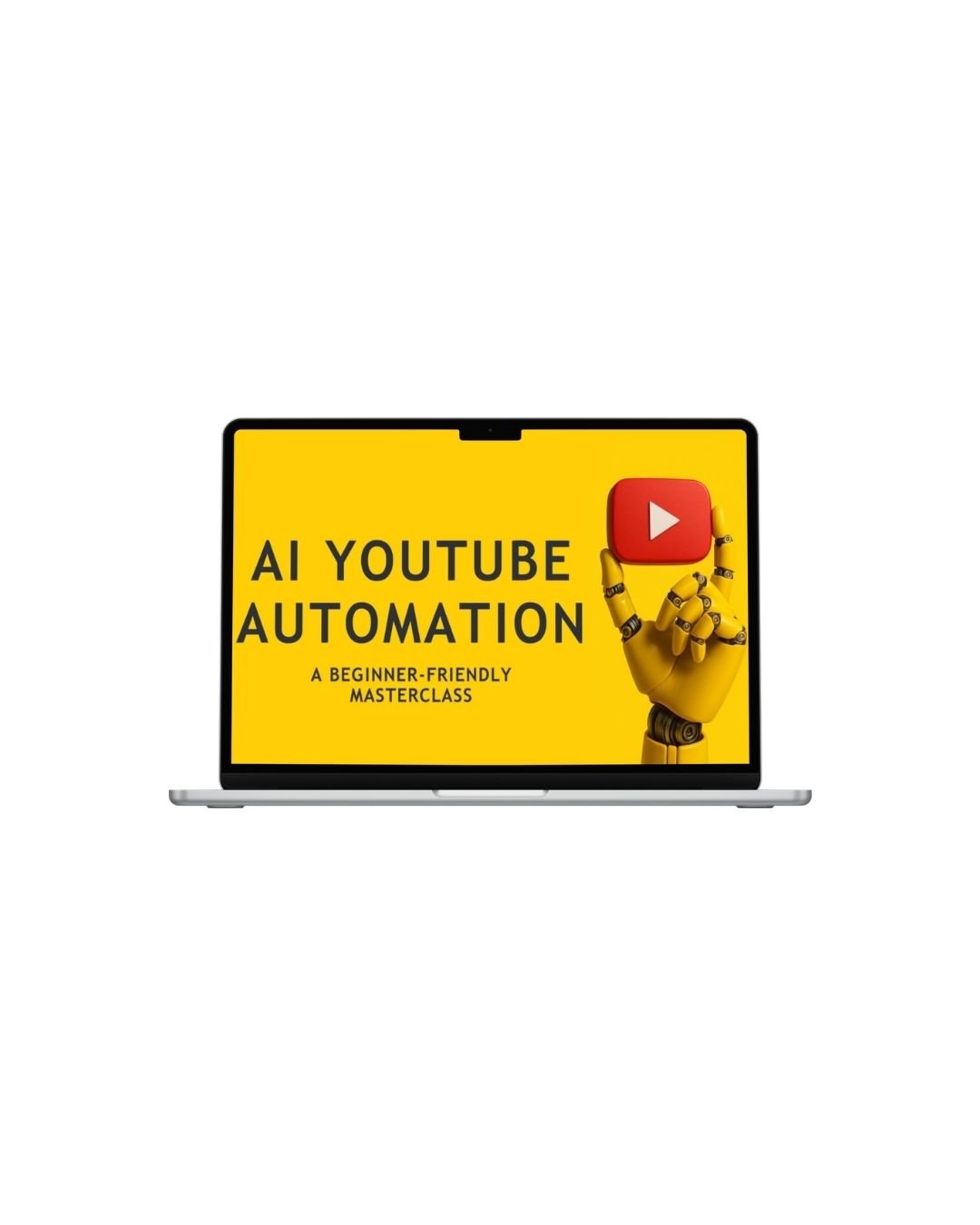
Brenny Moon – AI YouTube Automation Academy (2026)
Original price was: $360.00.$10.00Current price is: $10.00.
Interested in purchasing this course?Contact us directly to receive your payment link. 🟢 Get Payment Link on WhatsApp
Brenny Moon’s AI YouTube Automation Academy introduces learners to faceless YouTube channel creation using AI-assisted workflows. Explore niche research, script templates, AI voiceovers, video production, thumbnail creation, channel growth, and repeatable content systems. Designed for aspiring creators and digital marketers, the academy focuses on using AI tools to organize production while maintaining content quality and originality.
Description
Course Overview
Brenny Moon – AI YouTube Automation Academy is a training program designed for aspiring creators, entrepreneurs, and digital marketers who want to understand how AI tools can support the process of building and managing faceless YouTube channels. The academy focuses on combining content strategy, artificial intelligence, video production, and repeatable workflows to make channel creation more organized and efficient.
The program is aimed at people who want to explore YouTube content creation without appearing on camera in every video. It introduces ways to use AI tools throughout the production process, from researching topics and preparing scripts to generating voiceovers, creating visuals, designing thumbnails, and planning uploads.
What Is AI YouTube Automation Academy?
Brenny Moon’s AI YouTube Automation Academy is a learning community focused on launching, growing, and managing faceless YouTube channels with the help of AI tools. Its public description highlights niche selection, script templates, AI voice and video tools, thumbnail creation, channel growth, and systems for managing multiple channels.
The central idea is to create a repeatable content production process rather than approaching every video as a completely separate project. By organizing research, writing, production, editing, and publishing into a workflow, creators can work more efficiently while maintaining a consistent publishing schedule.
Automation does not mean that every part of a channel can be left unattended. Good results still require creative judgment, fact-checking, original ideas, audience research, and regular evaluation of video performance.
Explore YouTube Niche Research
Choosing an appropriate niche is an important early step in developing a YouTube channel. A niche gives a channel a clear subject area and helps creators understand the audience they want to reach.
The academy highlights niche selection as one of its core topics. Learners can explore how to assess potential topics, research existing channels, identify audience interests, and generate video ideas that fit a channel’s direction.
Useful niche research considers more than popularity. Creators should also evaluate competition, their ability to produce useful content consistently, audience expectations, and whether the topic can support a sustainable channel over time.
Create Scripts With AI Tools
A strong video script helps organize information and maintain viewer interest. AI writing tools can assist with brainstorming, outlining, drafting, and revising scripts, but they work best when guided by clear instructions and reliable research.
Brenny Moon’s academy advertises script templates as part of its training. These resources can help learners develop a more consistent approach to preparing video content.
Creators should review AI-generated scripts carefully to remove repetitive wording, verify factual claims, and ensure that the final video offers original value. Human editing remains important for accuracy, clarity, and storytelling.
Use AI for Voiceovers and Video Production
Faceless YouTube channels often rely on narration, visuals, animation, screen recordings, or other footage instead of a host speaking directly to the camera.
The academy highlights AI tool training for voice, video, and thumbnails. These tools can help creators experiment with different production methods and organize the process of turning a script into a finished video.
A typical workflow might involve researching a topic, drafting and editing a script, preparing narration, selecting suitable visuals, editing the video, adding captions, and reviewing the final result before publication.
AI can reduce some repetitive tasks, but it does not automatically guarantee professional quality. Creators should check narration, visual relevance, pacing, licensing, and overall accuracy before uploading.
Design Better YouTube Thumbnails
Thumbnails and titles help viewers understand what a video offers and decide whether to watch it. A thumbnail should communicate the subject clearly and complement the title rather than misrepresenting the content.
Learning thumbnail design involves understanding visual hierarchy, readable text, contrast, image selection, and consistent branding. AI-assisted design tools can help generate ideas and visual assets, while human review ensures that the final thumbnail is clear and relevant.
Creators can also compare the performance of different titles and thumbnails where YouTube’s available analytics and testing features allow it.
Understand YouTube SEO and Channel Growth
YouTube growth involves creating content that meets audience needs and presenting it clearly to potential viewers. Search-friendly titles, accurate descriptions, relevant keywords, appealing thumbnails, and well-structured videos can all contribute to discoverability.
A channel’s performance should be evaluated using analytics rather than assumptions. Metrics such as impressions, click-through rate, watch time, audience retention, and returning viewers can help creators understand what is working and where improvements may be needed.
The academy’s broader focus on channel growth and automation makes these concepts relevant to learners who want to build a more structured approach to publishing and evaluating videos.
Develop Repeatable Content Systems
One of the main advantages of organizing a YouTube workflow is that it becomes easier to identify recurring tasks and improve the production process.
For example, a creator can maintain a research document, use a consistent script outline, organize licensed visual assets, prepare thumbnail templates, and follow a publishing checklist. AI tools may assist with several steps, while the creator remains responsible for quality and editorial decisions.
The academy also advertises systems for managing multiple channels. Scaling should be approached carefully: running additional channels increases the workload involved in research, quality control, publishing, audience engagement, and policy compliance.
Building one reliable workflow before expanding can help creators understand the effort and resources required.
YouTube Monetization and Long-Term Development
The academy promotes learning how to launch, grow, and develop faceless YouTube channels. Monetization may be one goal, but earning revenue depends on eligibility requirements, audience demand, content quality, advertiser suitability, and compliance with YouTube’s current policies.
Creators should understand the platform’s rules concerning copyright, reused content, repetitive or mass-produced videos, and monetization eligibility. Using AI tools does not remove the need to create original, useful content or comply with platform policies.
There is no guaranteed timeline for channel growth or income. A channel may take time to build an audience, and some channels may not achieve monetization. Consistent experimentation and careful analysis are more reliable than assuming that automation alone will produce results.
Who Is This Academy For?
Brenny Moon’s AI YouTube Automation Academy may be relevant to:
- Beginners interested in learning how faceless YouTube channels work.
- Content creators who want to explore AI-assisted video production.
- Digital marketers developing video content skills.
- Entrepreneurs researching content-based business models.
- Existing YouTubers interested in improving their production workflows.
- Creators who want to organize research, scripts, voiceovers, visuals, and thumbnails more efficiently.
The program is best approached as an opportunity to learn content production and workflow skills rather than as a promise of passive income.
Why Consider Brenny Moon’s AI YouTube Automation Academy?
The academy brings together several important parts of faceless YouTube creation: niche research, script development, AI-assisted production, thumbnail creation, channel growth, and repeatable systems.
Learning how these stages connect can help creators understand the complete production process instead of focusing on a single AI tool. The skills may also be useful for related activities such as video editing, content planning, and AI-assisted media production.
For people interested in AI YouTube automation, the academy offers a structured starting point for exploring how modern tools can support a content workflow while keeping originality, quality, and audience value at the center.
Frequently Asked Questions
1. What is Brenny Moon’s AI YouTube Automation Academy?
It is a learning community focused on building and growing faceless YouTube channels with AI tools and repeatable content production workflows.
2. Who created AI YouTube Automation Academy?
The academy is associated with Brenny Moon, who publicly describes his work as creating, running, and managing YouTube channels.
3. What category does this course belong to?
The recommended category is AI YouTube Automation.
4. What topics does the academy cover?
Its public description highlights niche selection, script templates, AI voice and video tools, thumbnails, channel growth, and systems for managing multiple channels.
5. What is a faceless YouTube channel?
It is a channel where the creator does not need to appear on camera in every video. Content may use narration, animation, screen recordings, or other relevant visuals.
6. Can beginners learn YouTube automation?
The academy is marketed to beginners as well as people interested in scaling channels. Learners should be prepared to practice content research, production, and channel management.
7. Can AI help write YouTube scripts?
AI tools can assist with brainstorming, outlines, and drafts. Scripts should still be edited, fact-checked, and improved to provide original value.
8. Does the academy cover AI voiceovers and video creation?
Yes. Its public description highlights AI tool training for voice, video, and thumbnails.
9. Does YouTube automation guarantee passive income?
No. Channel growth and earnings are uncertain and depend on content quality, audience interest, monetization eligibility, and compliance with YouTube policies.
10. Can I manage multiple YouTube channels?
Managing multiple channels is possible, but each channel requires planning, quality control, publishing, and performance monitoring. Scaling should be based on available resources.
11. Why are thumbnails important?
Thumbnails help viewers understand a video’s subject and can influence whether they choose to watch it. They should accurately represent the content.
12. Do I need to check copyright and YouTube policies?
Yes. Creators must ensure that their content follows copyright rules, YouTube’s policies, and applicable monetization requirements, regardless of which AI tools they use.
Related products
-
Sale!

AI Emperor-AI Influencer Empire
Original price was: $49.99.$29.00Current price is: $29.00. -
Sale!

Jamie Heinrich-AI Film Marketing
Original price was: $97.00.$30.00Current price is: $30.00. -
Sale!

Ryan Carr-The Vibe Marketer
Original price was: $1,200.00.$35.00Current price is: $35.00. -
Sale!

The AI Garage-The Faceless YouTube Engine
Original price was: $29.00.$7.00Current price is: $7.00.

Reviews
There are no reviews yet.